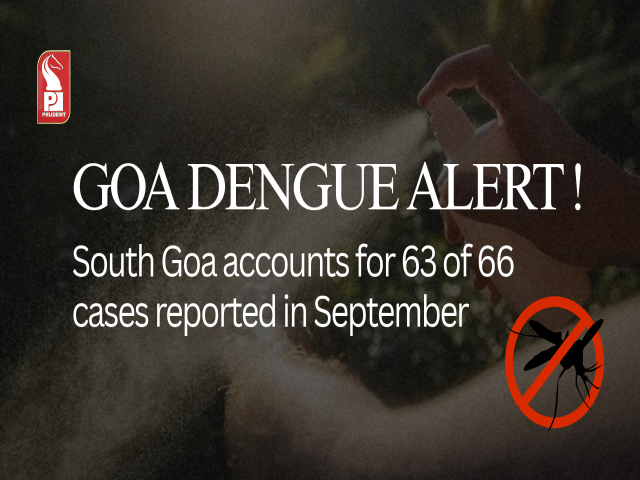
Goa health authorities have reported 66 dengue cases during September, with South Goa accounting for a staggering 63 cases. Only three cases were recorded in North Goa, alongside isolated cases in Taleigao. In response to the surge, the health department intensified surveillance and screening efforts across affected areas, testing 532 individuals state-wide (428 in South Goa and 104 in North Goa) to identify infections early and halt further transmission.
Health experts attributed the sudden rise in dengue cases to irregular rainfall patterns across the state. Inconsistent rain creates ideal conditions for mosquito breeding, as rainwater accumulates in stagnant pools and everyday household items. Officials warned that flowerpots, plant trays, discarded containers and open bins can store enough water for dengue-carrying mosquitoes to breed rapidly.
To control the outbreak, health workers have been conducting house-to-house inspections to trace and eliminate potential breeding sources. Residents are strongly urged to inspect their surroundings daily, clear standing water and dispose of or cover containers capable of holding rainwater. Authorities emphasised that eliminating stagnant water remains the single most effective measure to prevent dengue during the rainy period.